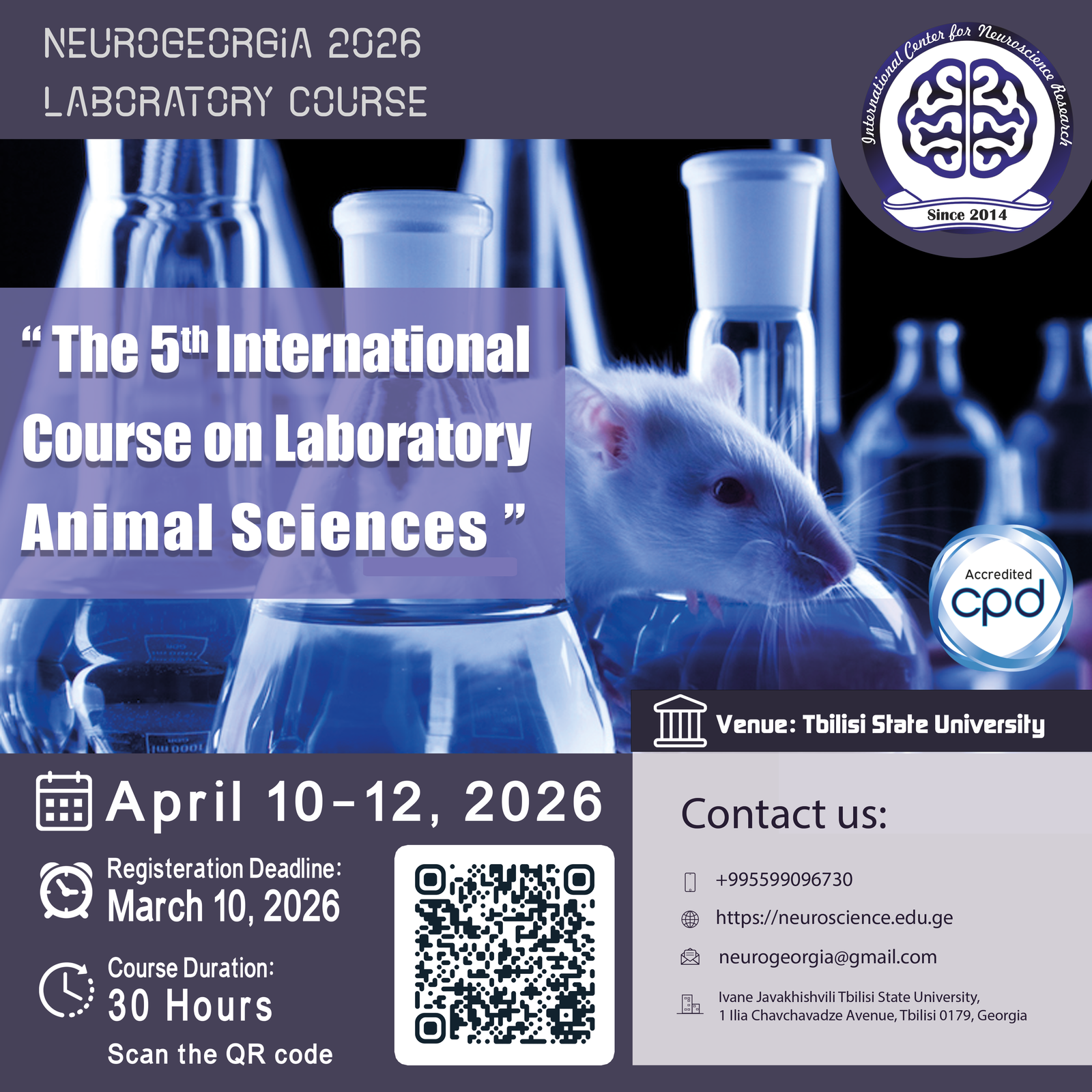
The 5th International Course on Laboratory Animal Sciences is an intensive 30-hour training program designed for:
- MSc and PhD students
- Medical students
- Early-career researchers
- Laboratory technicians
- Postdoctoral fellows
- Scientists beginning work with laboratory mice
The course combines comprehensive theoretical foundations (Day 1) with hands-on practical training (Days 2–3) at Ivane Javakhishvili Tbilisi State University, Georgia.
Why Take This Course?
This program is designed to match international standards used by FELASA-accredited institutions and EU Directive 2010/63 training frameworks.
Key Benefits
In most European research institutes and universities, proof of certified training in Laboratory Animal Science is mandatory before being allowed to work with laboratory animals.
Completion of this course provides:
✔ Documented proof of animal laboratory competence
✔ Internationally aligned curriculum (EU & FELASA framework-based)
✔ Intensive hands-on training with laboratory mice
✔ Focus on ethical practice and the 3Rs (Replacement, Reduction, Refinement)
✔ Practical training in anesthesia, humane endpoints, and sample collection
✔ Small group practical sessions for personalized supervision
✔ Evaluation-based certification
✔ CPD-accredited certificate with online verification feature
✔ Training delivered by neuroscience and laboratory animal experts
✔ Ideal preparation for doctoral and translational neuroscience research
This course strengthens both scientific competence and compliance readiness for researchers planning to work in academic or industry laboratories.
Course Structure
Day 1 – Theoretical Training
Aligned with internationally recognized laboratory animal science modules:
Core Topics:
- National and international legislation (EU Directive 2010/63 principles)
- Ethics, animal welfare, and the 3Rs
- Basic biology of the animal
- Animal care, health, and husbandry
- Pain recognition, suffering, and distress
- Humane endpoints
- Biostatistics in experimental design
- Breeding and transgenic models
- Transport and housing standards
- Anaesthesia and pain alleviation (theory)
- Principles of humane killing (theory)
Days 2–3 – Practical Training
Hands-on laboratory sessions conducted in TSU laboratories.
Practical Skills:
- Safe and gentle animal handling
- Restraining techniques
- Identification methods
- Observation of normal and abnormal behavior
- Minimally invasive procedures
- Blood sample collection techniques
- Anaesthesia (inhalation and injectable methods)
- Methods of injection in lab animals
- Humane methods of euthanasia and decapitation (skills training)
- Behavioural studies
- Brain extraction and dissection
- Pain assessment in live animals
- Stereotaxic Surgery (Introduction & Practical Demonstration)
Participants will work directly with mice under expert supervision.
Learning Outcomes
By the end of the course, participants will be able to:
- Apply ethical principles in animal experimentation
- Recognize and assess pain and distress in mice
- Perform basic laboratory animal handling safely and humanely
- Conduct minimally invasive procedures
- Apply anaesthesia appropriately for minor procedures
- Implement refinement techniques in daily laboratory practice
- Understand legislative responsibilities in animal research
- Integrate welfare principles into experimental design
Assessment & Certification
To ensure competence and international standard alignment:
- Participants must complete both theoretical and practical components.
- A written and/or practical evaluation will be conducted.
- Skills acquisition and knowledge will be assessed before certification.
Certification
Participants who successfully complete the course will receive:
✔ Official ICNR Certificate
✔ CPD-accredited certificate
✔ Online verification system for international validation
The certificate confirms successful completion of a 30-hour Laboratory Animal Science course.
Participation Criteria
Because this training involves live animals:
- Participants must be currently involved or planning to be involved in animal experimentation.
- Proof of institutional affiliation may be required.
- Participants with allergies to animals must inform organizers in advance.
Health & Safety Notice
If you suffer from allergies (animal-related or other), please bring any necessary emergency medication (e.g., inhalers, epinephrine auto-injectors).
Participants are responsible for their own insurance coverage.
The organizers are not responsible for health-related incidents during the course.
Who Should Apply?
- Graduate students entering neuroscience research
- PhD candidates working with animal models
- Early-career researchers transitioning to animal-based research
- Biomedical scientists needing structured laboratory animal training
- Researchers preparing for international collaborations
Course Duration
30 Hours Total
April 10–12, 2026
Day 1 – Theory
Days 2–3 – Practical
Early-bird Registration Deadline: March 10, 2026
Venue
Day 1: Ivane Javakhishvili Tbilisi State University
Tbilisi, Georgia
Day 2 & 3: Ivane Beritashvili Center of Experimental Biomedicine
Tbilisi, Georgia
Laboratory practical sessions will be conducted in certified university laboratory facilities.