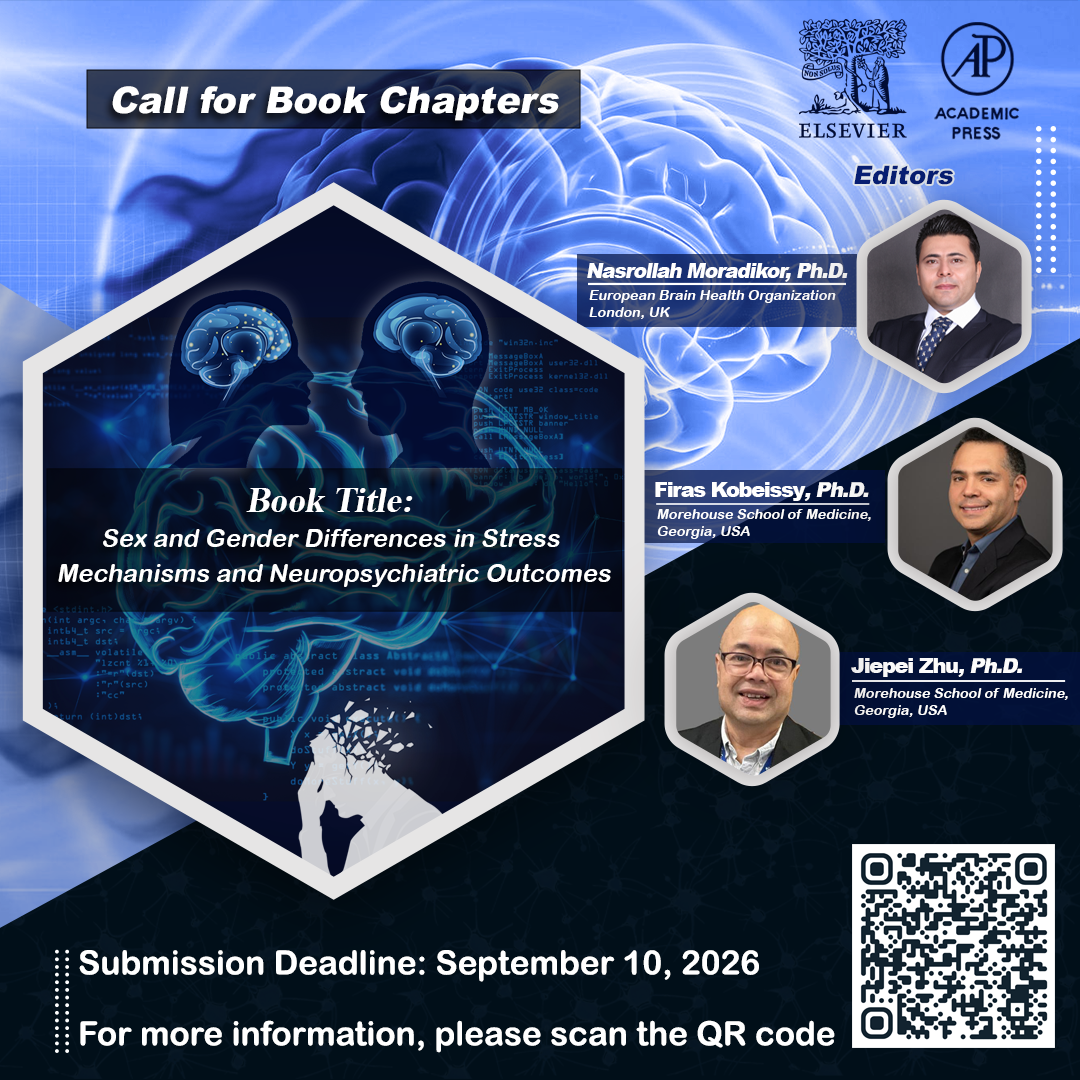
Sex and Gender Differences in Stress Mechanisms and Neuropsychiatric Outcomes is an interdisciplinary book that brings together leading research on the biological and psychosocial determinants of stress-related mental health outcomes. The book covers foundational concepts, biological mechanisms, clinical disorders, and translational perspectives, highlighting the importance of sex- and gender-informed approaches in neuroscience, psychiatry, psychology, and public health.
We invite researchers, clinicians, and scholars from European countries and the USA to contribute chapters that advance our understanding of sex and gender differences in stress mechanisms and their implications for neuropsychiatric disorders. This book aims to provide a comprehensive and authoritative resource that will promote more precise, inclusive, and effective research and clinical practice in mental health.
Chapter Preparation Guidelines:
Please pay attention to the following points when preparing your chapter:
1- There is no limit to the number of authors per chapter. 2- Only one corresponding author is allowed per chapter. 3- Our similarity index (plagiarism for text) is below 10%; otherwise we will return the chapter to the authors for rewriting. 4- All figures and tables used should be original or accompanied by a copyright agreement. 5- Figures and Illustrations: BioRender images can be used in an Elsevier book, but you must have an appropriate BioRender license (Academic or Industry) and properly cite your image, as per the terms outlined in your BioRender license and Elsevier’s copyright guidelines. 6- **Use of AI Tools: Please refer to the guidelines linked here for detailed policies: https://www.elsevier.com/en-gb/about/policies-and-standards/the-use-of-generative-ai-and-ai-assisted-technologies-in-writing-for-elsevier 7- The chapter submission deadline is September 10, 2026. 8- Chapter format includes: Title, Authors, Affiliations, Corresponding, Abstract, Keywords, Contents……Text then finally References. 9- The chapter should be between 25-30 pages (maximum 8000 words, excluding references). 10- The abstract should be between 100-150 words. 11- References are preferred to follow APA style. **AI tools can be used solely to improve readability and language. Authors must disclose their use with a statement in the published chapter. For images, AI usage is only permitted if it has been used to enhance brightness, contrast, or color balance.